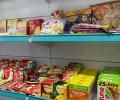
'In staples, we have still managed in rural areas.'

Regional and local fast-moving consumer goods (FMCG) brands are gaining momentum at the cost of national brands for the second quarter in a row. Consumer brands are now losing out on share, especially at the mass end of the market. Local brands have been able to capture market share as prices of raw materials are lower.

Consumer companies have started taking orders via phone calls and are also pushing retailers to order through their B2B applications.

In spite of a severe second wave of the coronavirus pandemic, and a widespread disruption in public life therefore, India's fast-moving consumer goods (FMGC) sector seems to have emerged as one of the most resilient segments of the economy. The early numbers and estimates for the April-June quarter indicate a steady recovery in FMCG players' business, which is now set to exceed the pre-pandemic level. Amid nationwide lockdowns because of the first Covid wave, FMCG revenues had been severely affected in mid-2020.

Fast-moving consumer goods (FMCG) distributors' association has written to the Ministry of Commerce and Industry, expressing its apprehensions that the "unchecked expansion" of quick commerce platforms was leading to severe disruptions in the retail ecosystem. India Consumer Products Distributors Federation on Thursday shot an email to the government, saying that significant challenges were posed by the rapid growth of quick commerce platforms such as Blinkit, Zepto and Instamart to the traditional retail sector and the FMCG distribution network in the country.

Fast-moving consumer goods (FMCG) sales continued to be lower in June compared to May with urban sales witnessing a steeper decline than rural. Sales of goods from shampoos to biscuits stayed lower due to inflationary pressures on commodities. This pushed consumer companies to continue taking price hikes, thus impacting demand, according to data by Bizom.

Tata Consumer Products Ltd (TCPL) on Thursday denied reports on the exit of cafe chain Starbucks from the Indian market, terming them as "baseless". Tata in a 50:50 joint venture with US-based Starbucks Corporation operates a cafe chain in India under the brand name of Starbucks, which is the leading cafe chain in India.

'Unless a comedian is involved in something society deems unforgivable...'

The October-December quarter (Q3FY25) results of fast moving consumer goods (FMCG) major Hindustan Unilever (HUL) indicated weak demand, with urban growth muted and rural showing recovery. Consolidated revenue grew by 1.6 per cent (volume was flat) to Rs 15,818 crore, due to price hikes. Prices of key raw materials such as palm oil and tea remained elevated, leading to compression of gross margin.

While sales momentum from rural areas may last another three to six months, sales growth in urban areas could stage a comeback by next year's June quarter as people learn to live with the coronavirus and economic activity gradually improves in the cities.

... catch up with Blinkit, Swiggy Instamart and Zepto...

Puri said ITC will focus on health and wellness products within the FMCG vertical. He also said the company will attempt to reinforce the existing categories in the FMCG segment.

Leading FMCG companies in the country are expecting their sales growth numbers in high double digit in the April-June quarter, a period when the broader market was severely impacted by the second wave of the COVID-19 pandemic. FMCG companies such as Godrej Consumer Products Ltd (GCPL) and Marico, in their quarterly updates to bourses, informed about double-digit sales growth. While Tata Consumer Products Ltd (TCPL) MD and CEO Sunil D'Souza in an interview had told PTI, the Tata Group FMCG firm expects higher growth in the Q1/FY'22 over Q4/FY'21.

The "asset-right" strategy, reiterated by ITC chairman Sanjiv Puri during the company's 112th annual general meeting (AGM) on August 11, received a thumbs up from the analysts. They, however, believe that sustained earnings growth and synergies with the demerged hotel's vertical will help the stock break out from the ongoing consolidation. "The stock is expected to consolidate between Rs 420 and Rs 450 in the near future.

Billionaire Gautam Adani's group on Monday announced its exit from FMCG joint venture Adani Wilmar by selling its entire stake to the Singaporean partner and in the open market for an estimated over $2 billion in a first major deal since the US bribery indictment. In a statement, Adani Enterprises Ltd -- which held 43.94 per cent stake in Fortune brand cooking oil, wheat flour and other food product maker Adani Wilmar Ltd -- said it will sell 31.06 per cent stake to Wilmar International. About 13 per cent will be sold in the open market to meet minimum public shareholding requirements.

Reliance Retail's digital commerce platform JioMart will morph into an e-marketplace offering multiple brands - from electronics, consumer durables, fashion and lifestyle, beauty, home, kitchen, and grocery - as it girds up to take on the likes of Amazon and Flipkart ahead of the festival season sales. India's largest retailer was in the process of onboarding third-party sellers these past few months, further increasing its selection across categories multifold. Its website and application offers general merchandise as well.

'Our target will come from rural areas as there are more outlets there.'
Mandates have been handed out to staffing solutions companies such as Randstad India and TeamLease, officials at these firms have said, as players increasingly push into rural areas to capitalise on the uptick in the hinterlands.

State Bank of India, Adani Ports, Tata Consultancy Services, ICICI Bank, Reliance Industries and PowerGrid were also among the laggards.
ITC Ltd on Friday reported a 23.09 per cent increase in consolidated net profit at Rs 5,070.09 crore for the third quarter ended December 2022, helped by growth momentum across its operating segments. The diversified company had posted a net profit of Rs 4,118.80 crore during the October-December quarter of the previous fiscal, ITC said in a regulatory filing. Its revenue from operations was up 3.56 per cent to Rs 19,020.65 crore during the quarter under review, as against Rs 18,365.80 crore in the corresponding period of the previous fiscal.
ITC has extensively reset its strategy and will explore opportunities to craft disruptive business models to set up structural drivers helmed by digital and sustainability for its next horizon of growth and make the company future-ready, chairman Sanjiv Puri said on Wednesday. The company is pursuing an accelerated journey to build a dynamic utureTech' enterprise by investing in cutting-edge digital technologies to shape a new paradigm of competitiveness, create innovative business models and tap newer opportunities, he said while addressing shareholders at ITC's virtual annual general meeting. As part of the next horizon vision, the company is "proactively exploring inorganic opportunities" even as it has shrunk "business segments that were incongruent to our growth aspirations, such as the Lifestyle Retailing Business" while the existing growth platforms comprising megabrands will be scaled up and fortified.

Leading FMCG maker HUL said that it has received a demand notice of Rs 962.75 crore from the Income Tax Department and will go in for an appeal against the order. The notice relates to non-deduction of TDS on payment of Rs 3,045 crore to GlaxoSmithKline Consumer Healthcare (GSKCH) for the acquisition of Intellectual Property Rights of the Health Foods Drinks (HFD) business consisting of brands as Horlicks, Boost, Maltova, and Viva, according to a recent exchange filing.

Corporate India's struggle with subdued revenue and earnings growth persisted in the October-December quarter of 2024-25 (Q3FY25). The combined net sales (gross interest earnings for lenders) of listed companies grew in single digits for the seventh consecutive quarter, while their combined net profit rose by a single digit for the third straight quarter.

Home-grown FMCG major Dabur India on Thursday said it will set up a Rs 400-crore manufacturing plant in Tamil Nadu's Villupuram district, marking the company's maiden foray into the South. State Industries Minister TRB Rajaa said, Dabur has signed a Memorandum of Understanding (MoU) with the state government to this effect on Thursday. The MoU outlines an approved Phase 1 investment of Rs 135 crore, scaling up to Rs 400 crore over five years, Dabur India said in a statement.

Days before Diwali, the monthly economic review by the finance ministry has highlighted moderation in urban demand, softening consumer sentiments and limited footfall as areas that need to be watched. In its review, released on Monday, the ministry also noted the early signs of artificial intelligence displacing workers, as described in anecdotal reports. The commentary from several large consumer goods companies, including Nestl India, Hindustan Unilever, and ITC, in their recent quarterly earnings, has been around a sluggish urban demand. Rural consumption, however, has mostly seen a revival, the companies pointed out.

To take the Rs 49,000 crore ITC to the top slot in the highly competitive FMCG business will require some aggression.

As the second wave of the pandemic ebbs and the daily caseload falls, the struggles of the urban poor have come into focus. Many have suffered income and job losses after two successive waves. The second wave, in particular, has seen the poor being hit hard on account of lack of medical and financial help. For the fast-moving consumer goods (FMCG) companies this has meant that an important segment is under severe distress.

Amazon's pantry division across 29 cities in India helps sellers sell FMCG products on its platform.

Adani Group on Friday raised Rs 4,850 crore from the sale of 13.5 per cent of its stake in Fortune oil maker Adani Wilmar as part of a strategy to exit non-core activities to focus on main infrastructure business. The conglomerate, which last month announced its exit from Adani Wilmar by selling the bulk of its stake to a joint venture partner, had on Thursday announced sale of 17.54 crore shares (13.50 per cent equity) in the company on January 10 (to non-retail investors) and on January 13 (to retail investors) at a floor or minimum price of Rs 275 apiece.

Companies whose products have not been picked up for distribution in Gujarat under a "non-cooperation movement" include Marico, Dabur, Emami, Britannia, Reckitt Benckiser, and Godrej Consumer Products.
The country's top FMCG stocks, such as Hindustan Unilever, ITC, Nestl, Britannia, Godrej Consumer Products, and Dabur, among others, are currently trading at around 41x their trailing 12-month earnings, down from their peak P/E multiple of around 48x at the end of December 2018.

'Inflation is not good for industry. Nor for the economy as a whole.'

Marico may buck the industry trend with the fast-moving consumer goods (FMCG) major reporting strong growth and favourable commentary in a weak quarter for the industry. The company reported consolidated revenue growth of 8 per cent year-on-year (Y-o-Y) in Q2FY25. Domestic revenue growth was 8 per cent Y-o-Y with 5 per cent volume growth (4 per cent in Q1FY25).

Patanjali Foods has been served a show cause notice by the GST intelligence department, asking the company to explain why input tax credit worth Rs 27.46 crore should not be recovered from it. The yoga guru Ramdev-led Patanjali Ayurved Group firm, which is mainly into the edible oil business, has received the notice from the Directorate General of GST Intelligence, Chandigarh Zonal Unit, according to a regulatory filing made by the company on April 26.

The government is set to examine concerns over quick commerce companies potentially undermining businesses of local kirana stores, particularly in the context of the draft Digital Competition Bill, according to official sources. The Ministry of Consumer Affairs recently raised the issue with the Ministry of Corporate Affairs during discussions around the proposed legislation. "We need to assess if and how the Bill can address these concerns and explore further steps to include provisions to keep a check," a senior official stated.

Private consumption is back driven by festive spending, and the medium-term economic outlook remains bullish as the innate strength of the macro-fundamentals reasserts itself, the Reserve Bank Bulletin said on Wednesday. Global economic activity remained resilient during Q4:2024 amidst fragile confidence and rising protectionism, said an article on 'State of the Economy' published in the November Bulletin.

The Tata group firm has enhanced its product portfolio through "targeted acquisitions" as it aspires to be a formidable player in the FMCG category, said Chandrasekaran, who is also the chairman of Tata Sons. Besides, it has stepped up the pace of innovation across markets in line with consumer trends such as health and wellness and convenience, he said in his message to shareholders in the latest annual report of TCPL.

Bengaluru dominated as the country's top city for job opportunities and salary growth as it has registered a 9.3 per cent year-on-year increase, closely followed by Chennai and Delhi, a report said on Thursday. This growth underlines Bengaluru's reputation as a technology and business hub as the average monthly unified salary in the city stood at Rs 29,500, making it the highest-paying city in the country, according to TeamLease Services Jobs and Salaries Primer report for FY24. The report is based on an analysis of unified salaries across temporary and permanent hiring markets.

'Domestic investors are opening up to the idea of high-growth Internet companies as a pool of value creation.' 'They like the execution that they see with Zepto, and for us, that is the most important factor.'

Overall, the domestic FMCG market bounced back to levels of 98 in June compared with 75 in May and 101 in March before the nationwide lockdown was announced. The pre-Covid March index for foods was 103, and for non-foods, it was 99.
